Comparing Roof Replacement Installation Methods: Insights From Collegeville’s Top Contractors
October 3, 2025
Comparing Roof Replacement Installation Methods: Insights From Collegeville’s Top Contractors
Wondering how installation methods differ among Collegeville roof replacement companies? Understanding this is key to ensuring your new roof offers top-notch durability, energy efficiency, and valid manufacturer warranties. Supreme Roofing PA, serving Collegeville and the surrounding Montgomery, Bucks, Delaware, and Chester counties, expertly blends proven techniques with premium materials to stand up to Pennsylvania’s challenging snow, ice dams, and wind storms. This guide will walk you through:
Why installation methods are crucial for longevity and warranty coverage
How our local climate influences the choice of techniques
Key approaches for asphalt, metal, tile, and synthetic roofing systems
A look at GAF vs. CertainTeed manufacturer standards
Tips for selecting a certified Collegeville contractor
Cost breakdowns, ROI insights, and emerging green installation trends
With this knowledge, you’ll be well-equipped to schedule a phone consultation and secure a roof replacement perfectly suited to your home’s unique needs.
Why Do Installation Methods Matter for Roof Replacement in Collegeville, PA?
The foundation of a resilient roofing system—one that effectively combats snow loads, prevents ice dams, and maintains optimal energy efficiency—lies in proper installation. Choosing the right method is essential for ensuring structural integrity, maximizing wind resistance, and upholding all warranty requirements for both materials and workmanship. For homeowners, this translates to fewer leaks, reduced heating expenses, and the peace of mind that comes with valid manufacturer guarantees.
How Does Collegeville’s Climate Influence Roof Installation Techniques?
Collegeville’s harsh winters and the persistent threat of ice dams necessitate the use of ice and water shields along eaves and in valleys to prevent meltwater from seeping underneath. For steep-pitch roofs, metal drip edges and reinforced underlayment are often employed to help heavy snow slide off efficiently. These climate-specific adaptations are vital for protecting against the damaging effects of freeze-thaw cycles and significantly extending the lifespan of your roof, leading directly into the material-specific benefits we’ll discuss.
What Are the Benefits of Proper Roof Installation for Homeowners?
When a roof is installed correctly, it provides superior waterproofing, enhances thermal performance, and crucially, keeps your manufacturer’s warranty valid. Meticulous attention to nailing patterns, underlayment placement, and flashing details effectively seals out moisture, while optimized attic ventilation helps reduce heat buildup. These combined factors lead to lower energy bills, fewer costly repair calls, and robust protection for your home’s interior against the elements.
How Do Installation Methods Affect Roof Replacement Cost in Collegeville?
The complexity of the installation process directly impacts labor rates, and the handling of specialized materials and underlayment can add to the initial investment. For instance, intricate standing-seam metal panels demand more labor hours and precise fasteners compared to standard three-tab shingles. However, these higher upfront installation costs often pay dividends through a longer service life and reduced ongoing maintenance expenses.
Factors Influencing Roof Replacement Costs
When it comes to roof replacement costs in Collegeville, several factors come into play, including the size of your home, the specific roofing materials you choose, and the complexity of your roof’s design. Asphalt shingles typically represent a more budget-friendly option, whereas metal, tile, and slate roofing materials come with a higher price tag.
This resource offers a detailed look at the various elements that contribute to the overall cost of a roof replacement, helping homeowners get a clearer picture of their investment.
What Are the Key Roof Replacement Installation Methods Used by Collegeville Contractors?
In Collegeville, roof replacements generally involve four main installation methods, each tailored to the specific material being used: asphalt shingle overlay, full tear-off with deck inspection, standing-seam metal panel installation, and interlocking tile or synthetic systems. Every method follows a consistent sequence: tear-off, deck repair, underlayment application, flashing installation, material attachment, and thorough cleanup.
How Is Asphalt Shingle Installation Performed for Collegeville Homes?
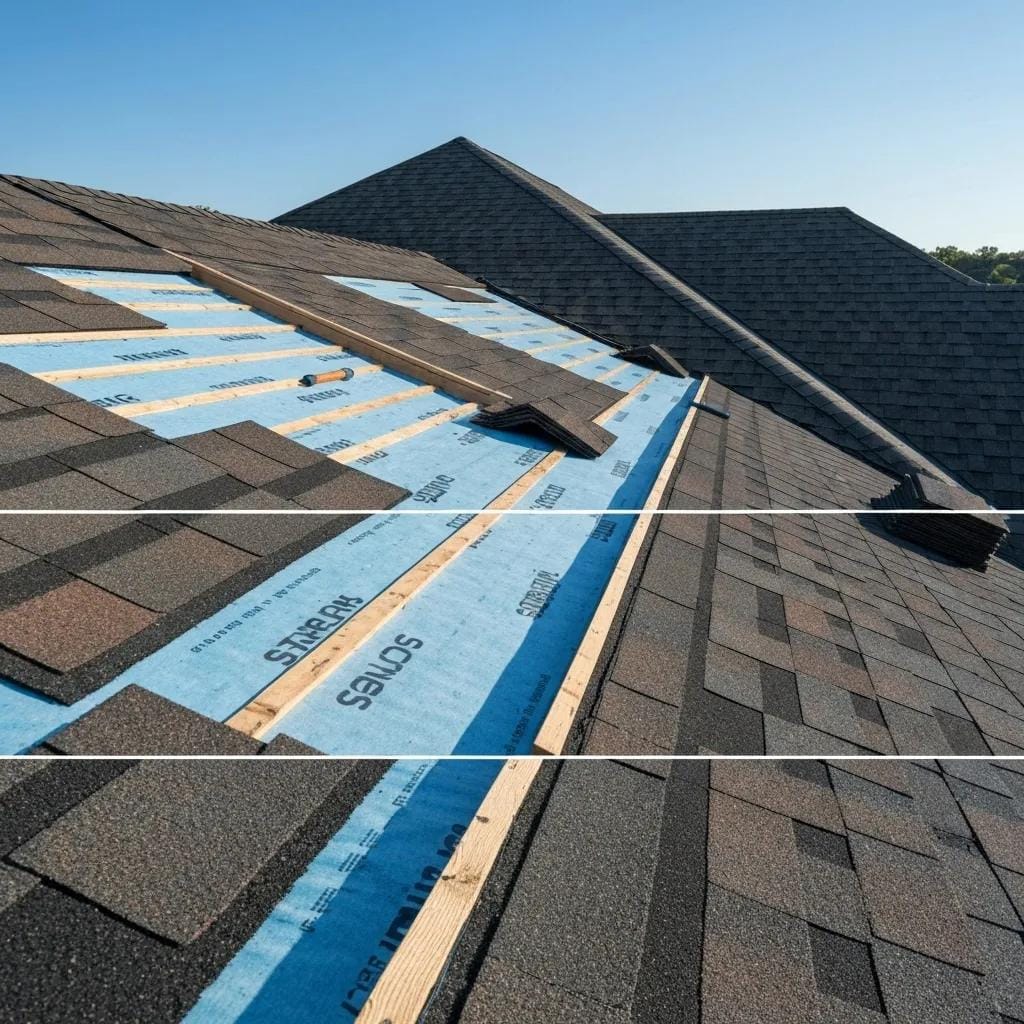
The process for installing asphalt shingles begins with a complete tear-off of the old roofing layers to allow for a thorough inspection and any necessary repairs to the roof deck. An underlayment, often an ice and water shield, is then applied to critical areas prone to water intrusion. Starter strips are carefully nailed along the eaves before the three-tab or architectural shingles are laid in a staggered pattern, strictly following the manufacturer’s specifications. Proper flashing is installed around all penetrations like chimneys and vents to expertly channel water away from vulnerable joints.
What Are the Common Metal Roofing Installation Techniques in Pennsylvania?
For standing-seam metal panels, installation involves concealed clips that allow for natural thermal expansion and contraction. Corrugated profiles, on the other hand, utilize through-fasteners equipped with neoprene washers. A robust underlayment and a metal drip edge are essential for protecting the eaves. Our contractors carefully consider panel length to minimize the number of seams and incorporate expansion joints at the ridge caps to prevent any potential buckling caused by temperature fluctuations.
How Do Installation Steps Differ for Tile and Synthetic Roofs?
Installing tile roofs requires a reinforced deck capable of supporting the significant weight of clay or concrete tiles, along with battens to securely fasten each tile. Synthetic slate, while mimicking the look of traditional tile, utilizes lighter composite materials and an interlocking system that allows for quicker installation. Both types of roofing demand specialized underlayment designed for effective moisture control beneath the tiles and custom-fabricated flashing for valleys and transitions.
What Are the Essential Installation Components Like Underlayment and Flashing?
Underlayment serves as a crucial secondary layer of waterproofing. Ice-and-water shields are specifically used to protect vulnerable areas like eaves and valleys, while synthetic felt provides excellent UV resistance beneath exposed roofing sections. Flashing, typically made from aluminum or copper, is meticulously installed around chimneys, dormers, and where the roof meets a wall, effectively directing water onto the underlayment rather than allowing it to penetrate. These components are fundamental to the reliability of any roofing method.
How Do GAF and CertainTeed Installation Methods Compare for Roof Replacement in Collegeville?
GAF and CertainTeed are at the forefront of shingle innovation, and both manufacturers provide precise installation sequences that are mandatory for activating warranty coverage. Our certified installers meticulously follow these detailed steps to guarantee optimal adhesion, superior wind uplift resistance, and effective moisture control.
GAF and CertainTeed Installation Methods
GAF and CertainTeed are leading shingle manufacturers that prescribe specific installation sequences to activate warranty coverage. Certified installers follow these steps to ensure optimal adhesion, wind uplift resistance, and moisture control.
This source highlights the importance of following manufacturer-specific installation guidelines to maintain warranty validity.
What Are GAF’s Specific Installation Guidelines and Warranty Requirements?
GAF mandates the use of their StarterStrip™, TimberTex™ underlayment, and RidgeVent™ as part of a comprehensive system approach. Shingle courses must be installed with offset chalk lines and a 4-nail pattern on architectural shingles. Strict adherence to these GAF® system requirements unlocks the potential for a Lifetime Limited Warranty, covering both materials and workmanship when installed by GAF Master Elite contractors.
How Does CertainTeed’s Installation Process Ensure Quality and Durability?
CertainTeed’s guidelines recommend the use of WinterGuard™ in low-slope areas and DiamondDeck™ synthetic underlayment across the entire roof deck. Nailing patterns vary depending on the specific shingle line, with enhanced fastener specifications provided for high-wind zones. Proper application of CertainTeed®’s 50-foot ice and water shield and Seal-A-Ridge™ products is essential for qualifying homes for Platinum Protection® Warranty coverage.
Why Is Following Manufacturer Installation Standards Crucial for Warranty Validity?
Strictly adhering to each brand’s specific installation sequences and utilizing only approved accessory products is the key to activating full warranty protection. Any deviations—such as skipping underlayment layers or using incorrect fasteners—can unfortunately void the coverage, leaving homeowners responsible for any material failures or subsequent repair costs.
GAF vs. CertainTeed: Which is Better for Your Roof?
GAF and CertainTeed are both prominent shingle manufacturers, but they cater to slightly different market segments. GAF tends to focus on broad accessibility and volume, while CertainTeed often emphasizes premium quality and more luxurious options.
How Can Homeowners Choose the Right Local Roofing Contractor in Collegeville, PA?
Selecting a reputable local contractor is your assurance of compliance with local building codes, the use of climate-appropriate techniques, and the ability to transfer warranties. Their expertise in navigating Collegeville’s permit processes and understanding its specific weather challenges leads to smoother projects and roofs that stand the test of time.
What Qualifications and Certifications Should You Look For?
Always look for contractors who hold GAF Master Elite or CertainTeed SELECT ShingleMaster™ credentials, in addition to a valid Pennsylvania roofing license. Training certifications are a strong indicator of mastery over manufacturer requirements, while membership in professional organizations like the National Roofing Contractors Association signifies a commitment to industry best practices.
Roofing Certifications in Pennsylvania
While Pennsylvania doesn’t mandate a statewide roofing license, certifications like GAF Master Elite and CertainTeed SELECT ShingleMaster are highly valuable. These certifications clearly demonstrate a contractor’s dedication to quality workmanship and their level of expertise.
How Do Contractors Adapt Installation Methods to Local Building Codes and Weather?
Local building codes might require specific measures for ice-dam protection in eaves or mandate certain wind speed ratings for shingles. Experienced contractors will align shingle specifications with Collegeville’s typical wind and snow loads, select appropriate underlayment types to handle freeze-thaw cycles, and ensure all necessary permits are secured for full code compliance.
What Questions Should Homeowners Ask Before Hiring a Contractor?
Homeowners should always inquire about the contractor’s roof tear-off procedures, their deck inspection protocols, the specifics of their warranties, estimated project timelines, and their cleanup process. Requesting proof of insurance, local client references, and documented manufacturer certifications will help verify the contractor’s reliability and expertise.
What Are the Typical Costs and ROI of Different Roof Replacement Installation Methods in Collegeville?
Roof replacement costs in Collegeville naturally vary depending on the installation method and materials chosen, with labor and accessory components significantly impacting the overall budget. Understanding these cost drivers empowers homeowners to make informed decisions, balancing immediate investment against long-term value.
How Does Installation Method Influence Labor and Material Costs?
More complex installations, such as those involving standing-seam metal, require specialized tools and highly skilled labor, which naturally increases hourly rates. In contrast, standard asphalt shingle installations utilize fewer specialized tools and can be completed more rapidly across large roof areas. The quality of underlayment, the types of flashing used, and the chosen ventilation systems also contribute to the material expenses.
What Is the Average Price Range for Asphalt vs. Metal Roof Replacement?
Roofing Material
Average Cost (2,000 sq ft)
Lifespan Expectancy
Labor Complexity
Architectural Shingles
$10,000 – $18,000
25 – 30 years
Moderate
Standing-Seam Metal
$18,000 – $35,000
40 – 70 years
High
Asphalt shingles offer an attractive balance of affordability and straightforward installation, while metal roofing commands a higher price point due to its enhanced longevity and superior weather performance. This cost comparison table is designed to help homeowners identify investment choices that align with both their budget and their long-term expectations.
Roof Replacement Costs in Collegeville, PA
The average cost for a roof replacement in Collegeville, PA, typically falls between $6,792 and $7,723, though specific project costs can range from $6,327 to $8,188. These figures are derived from data collected on completed projects in the Collegeville area.
How Does a New Roof Increase Home Value in Collegeville?
A professionally installed, modern roof significantly boosts curb appeal, enhances energy efficiency, and provides potential buyers with confidence regarding future maintenance needs—typically recouping 60–70 percent of its replacement cost through increased resale value. The use of durable materials and certified installation practices signals a level of quality that is highly attractive to discerning homebuyers in Eastern Pennsylvania.
What Are the Step-by-Step Processes for Professional Roof Replacement Installation?
A professional roof replacement follows a meticulously structured workflow designed to ensure safety, uphold quality standards, and guarantee compliance with all building codes. Each phase is dedicated to achieving specific objectives, from the initial tear-off to the final inspection.
What Are the Key Stages from Tear-Off to Cleanup?
Mobilization and Safety Setup – Secure the work perimeter and implement fall protection measures.
Tear-Off Existing Layers – Carefully remove old shingles, underlayment, and flashing.
Deck Inspection and Repair – Thoroughly assess the deck for any damage and replace compromised sections.
Underlayment and Ice Shield – Install the ice and water barrier at eaves, followed by synthetic felt across the entire deck.
Flashing Installation – Precisely install step, counter, and valley flashing around all roof penetrations.
Material Attachment – Securely nail or clamp shingles/panels according to manufacturer-specified patterns.
Ventilation and Ridge Caps – Apply ridge vents and caps to ensure optimal attic airflow.
Final Inspection and Cleanup – Hand-nail any loose pieces, meticulously remove all debris, and rake the area for stray nails.
Each stage is carefully executed to build upon the previous one, ensuring the structural integrity and weather resistance of the new roof throughout the entire installation process.
How Is Roof Deck Preparation and Inspection Conducted?
Our technicians meticulously inspect the roof deck for any signs of rot, soft spots, or protruding nails. Any decking that is compromised will be replaced section by section using code-compliant plywood or oriented strand board. This crucial preparation step creates a stable and sound substrate, ensuring proper underlayment adhesion and reliable fastener holding power, which are the cornerstones of a watertight roofing system.
What Are Best Practices for Installing Underlayment, Flashing, and Ventilation?
We utilize high-performance synthetic underlayment that is resistant to tears and UV exposure. Flashing must be installed correctly, lapped beneath the shingles and sealed with approved roofing cement. Ridge vents and soffit intakes work together harmoniously to establish balanced attic airflow, effectively preventing moisture buildup and extending the life of your shingles. Proper sequencing of these components ensures they integrate seamlessly for maximum performance.
How Are Different Materials Applied During Installation?
Asphalt shingles are meticulously hand-nailed using corrosion-resistant fasteners, guided by precise chalk lines. Metal panels are mechanically seamed and fastened via clips concealed beneath adjacent panels. Tile systems are attached by clipping or hooking individual units onto battens, while synthetic composite tiles interlock directly over the underlayment. Each material requires specific tools and fastening patterns to meet stringent performance standards.
How Are Advanced and Eco-Friendly Roofing Installation Methods Emerging in Collegeville?
Emerging green roofing trends in Collegeville include the installation of solar shingles, the application of cool-roof coatings, and the use of recycled composite materials, all designed to deliver significant energy savings and sustainable performance.
Benefits of Eco-Friendly Roofing
Eco-friendly roofing materials, such as those made from recycled shingles, offer a way to reduce environmental impact. Cool roofs are specifically engineered to reflect more sunlight, which helps to decrease heat absorption and subsequently lower cooling costs.
What Are Solar Shingle and Cool Roof Installation Techniques?
Solar shingles seamlessly integrate photovoltaic cells directly into roofing tiles. This requires precise wiring channels to be created beneath the underlayment and specialized flashing at all roof transitions. Cool-roof coatings consist of reflective acrylic elastomeric compounds that are applied over existing shingles to minimize heat absorption. Both of these advanced systems demand certified installers to ensure the roof’s integrity and electrical safety are maintained.
How Do Eco-Friendly Materials Affect Installation Methods and Durability?
Composite shingles made from recycled rubber or plastic install much like traditional asphalt shingles but provide superior impact resistance and long-term color stability. These innovative materials often come with integrated underlayment backings, which simplifies the tear-off and re-installation process while also diverting waste from landfills. Their impressive durability can often exceed 50 years, even when subjected to Pennsylvania’s demanding climate conditions.
Why Are These Methods Gaining Popularity Among Collegeville Homeowners?
Collegeville homeowners are increasingly drawn to the appeal of lower energy bills, extended warranty options, and the opportunity to practice environmental stewardship. Furthermore, financial incentives such as federal tax credits for solar installations and local utility rebates for reflective roofs are accelerating the adoption of these sustainable roofing solutions.
Investing in a new roof replacement is a significant decision for your home, representing a crucial step toward long-term savings and environmental responsibility. Supreme Roofing PA is here to expertly guide you through every aspect, from selecting the ideal materials to ensuring code compliance and achieving installation precision. Contact us today to request your complimentary phone consultation—your durable, energy-efficient roof is waiting.
Recent Posts
November 1, 2025
Best Roofing Materials for Collegeville’s Climate: A Comprehensive Guide for Homeowners
Collegeville’s Best Roofing Materials: A Deep Dive for HomeownersCollegeville’s distinct four-season climate—from heavy snow and the const...
Key Factors to Evaluate When Comparing Quotes From Collegeville Roofing Contractors
Choosing the Right Collegeville Roofing Contractor: A Guide to Comparing QuotesNavigating a stack of roofing bids for your Collegeville home can feel ...